
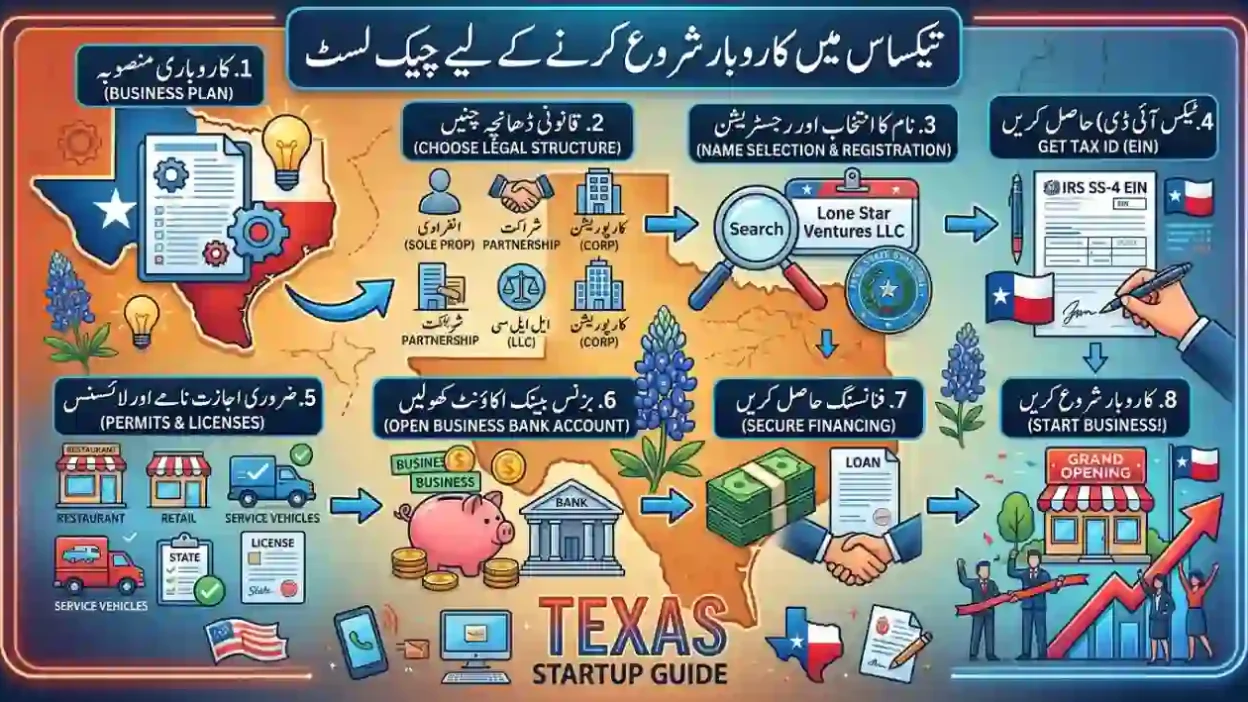
To start a business in Texas, choose a business idea, research your market, select a legal structure, register your business if required, obtain an EIN, and check tax obligations and local permits. Open a business bank account, arrange insurance, and create a plan for managing expenses and attracting customers.
Key Takeaways
- Choose a business idea based on customer demand, startup costs, and your skills.
- Select a legal structure, such as a sole proprietorship, LLC, or corporation.
- Register with the appropriate Texas agency and check whether permits are required.
- Understand federal, state, and local tax rules before accepting payments.
- Keep business and personal finances separate and plan for future growth.
How to Start a Business in Texas
Introduction
Starting a business in Texas can be an exciting way to turn your skills, experience, or interests into a source of income. Whether you want to open a local shop, offer professional services, launch an online store, or build a technology company, Texas offers many opportunities for entrepreneurs.
However, opening a business involves more than choosing a name and finding customers. You must decide on a legal structure, understand registration requirements, review taxes, and determine whether your industry needs special licenses or permits.
Learning how to start a business in Texas can help you avoid common mistakes and prepare for long-term success. The right steps will depend on your business type, location, and plans for growth.
This guide explains how to move from an initial idea to a legally organized business, including registration, taxes, startup costs, and practical ways to prepare for your first sale.
What Does “How to Start a Business in Texas” Mean?
The phrase “how to start a business in Texas” refers to the steps involved in creating and operating a new business under Texas and applicable federal laws. These steps may include planning, choosing a business structure, registering a name, handling taxes, and obtaining the necessary permits.
People use this search term when they want practical guidance on launching a small business, forming an LLC, opening a store, or starting an online company. The exact requirements depend on the business activity and where it operates.
Texas provides an official business startup guide to help entrepreneurs understand these responsibilities.
Why Follow the Right Steps When Starting a Business?
A clear startup process helps you organize your business and avoid preventable expenses. It also makes it easier to understand your legal responsibilities before accepting customers or hiring employees.
Following the right steps can help you:
- Avoid legal problems: Identify required registrations and industry permits.
- Control expenses: Estimate startup costs before committing money.
- Build credibility: Establish professional records and payment systems.
- Manage taxes: Identify applicable state and federal tax obligations.
- Prepare for growth: Choose a structure that suits your future plans.
10 Essential Steps to Start a Business in Texas
1. Choose a Business Idea
Start with a product or service that solves a real problem. Consider your skills, experience, budget, and the needs of customers in your target market.
Research competitors, compare prices, and speak with potential customers before investing heavily. For example, you might test a cleaning service in one neighborhood before hiring a full team.
Quick tip: Write down who your customers are, what they need, and why they would choose your business.
2. Create a Business Plan and Budget
A business plan explains what you will sell, who will buy it, how you will reach customers, and how you expect to make money. It can also help you evaluate whether the idea is financially realistic.
Estimate expenses such as equipment, inventory, rent, insurance, marketing, software, and professional services. Include enough working capital to cover bills while sales are still growing.
The Texas business startup guide provides planning and financing resources.
3. Choose a Legal Business Structure
Your business structure affects liability, taxes, paperwork, and ownership. Common options include:
- Sole proprietorship: A simple structure for one owner, but it generally does not separate personal and business liabilities.
- Partnership: A structure for two or more owners, with responsibilities determined by the arrangement and applicable law.
- Limited liability company (LLC): Offers liability protection in many circumstances and flexible federal tax treatment.
- Corporation: A separate legal entity that may suit businesses seeking investors or a more formal ownership structure.
Compare the options before filing. An LLC is not automatically the right choice for every business, so consider speaking with a qualified attorney or tax professional.
4. Select and Register Your Business Name
Choose a name that is easy to remember, fits your brand, and does not create confusion with an existing business.
Check name availability through the Texas Secretary of State, and review relevant trademark records before committing to a name. Registering an entity name does not automatically provide trademark protection.
If you operate as a sole proprietor or partnership under a name different from the owner’s legal name, you may need to file an assumed name certificate with the appropriate county clerk. Requirements differ by business structure.
5. Register Your Business in Texas
Your registration requirements depend on your chosen structure.
If you form an LLC or corporation in Texas, you generally file a Certificate of Formation with the Texas Secretary of State. An LLC also needs a registered agent with a physical registered office in Texas to receive legal documents and official notices. The agent must consent to the appointment.
Sole proprietors may have different filing obligations, including assumed-name registration where applicable.
You can review forms and filing guidance through the official Texas Secretary of State business portal.
6. Apply for an Employer Identification Number (EIN)
An Employer Identification Number, or EIN, identifies your business for federal tax purposes. You may need one for employees, certain business structures, or other federal tax requirements.
You can apply through the IRS EIN application page. Applying directly through the IRS is free.
A sole proprietor without employees may not need an EIN in every situation, but obtaining one can be useful for business administration. Check your specific requirements before applying.
7. Check Texas Business Licenses and Permits
Texas does not require a general statewide business license for every business. However, specific activities may require state, federal, county, or city permits.
For example, restaurants may need health-related approvals, contractors may face occupation-specific licensing rules, and businesses operating from physical premises may need zoning or occupancy approvals.
Contact the relevant agency and local government before opening. The state’s Business Permit Office provides guidance and a business license and permit guide.
8. Understand Taxes and Sales Tax Requirements
Texas businesses may have federal income tax, payroll tax, franchise tax, sales tax, or other obligations, depending on their structure and activities.
If you sell taxable goods or services, you may need a Texas Sales and Use Tax Permit. Check the Texas Comptroller’s permit guidance to determine whether you must register.
Texas franchise tax requirements depend on the entity and applicable rules, including revenue thresholds and reporting obligations. Do not assume that forming an LLC means you automatically owe franchise tax—or that you have no reporting duties.
Keep accurate records of income, expenses, invoices, and tax filings from the beginning.
9. Open a Business Bank Account
Once your business is properly organized, consider opening a separate business bank account. Banks may request formation documents, an EIN, identification, and other information depending on the business and account.
Separating business and personal funds makes bookkeeping easier and supports clearer financial records. For an LLC or corporation, it also helps maintain separation between the entity and its owners.
You may also want accounting software, a payment processor, and a business credit card suited to your needs.
10. Launch, Market, and Manage Your Business
Before opening, confirm that required registrations, permits, insurance, and tax arrangements are in place. Set up a professional website or business profile, explain your services clearly, and make it easy for customers to contact you.
Choose marketing methods that fit your audience, such as local search, referrals, social media, email, or partnerships with nearby businesses.
Track sales, expenses, customer feedback, and cash flow every month. Use these numbers to decide when to adjust prices, expand services, or invest in growth.
Comparison Table: Business Startup Requirements
| Step | Main Purpose | Where to Start |
|---|---|---|
| Business idea | Identify customer demand | Market research |
| Business plan | Estimate costs and revenue | Texas.gov |
| Legal structure | Choose ownership type | Attorney or tax professional |
| Business name | Check availability | Texas Secretary of State |
| Registration | Establish legal entity | SOS business portal |
| EIN | Obtain federal tax ID | IRS.gov |
| Licenses | Check industry rules | State and local agencies |
| Taxes | Identify tax obligations | Texas Comptroller and IRS |
| Bank account | Separate finances | Your chosen bank |
| Launch | Attract and serve customers | Website and marketing |
Common Mistakes to Avoid
1. Assuming every business needs the same license. Texas does not require a general statewide business license for every business, but certain industries and locations have specific requirements.
2. Choosing an LLC without comparing alternatives. An LLC can offer liability protection, but the best structure depends on your ownership, taxes, and business goals.
3. Mixing personal and business money. Separate accounts and accurate records make it easier to track expenses and manage taxes.
4. Ignoring ongoing tax filings. Even when an entity owes no franchise tax, it may still have reporting obligations. Check the rules for each reporting year.
5. Spending too much before testing demand. Expensive equipment, long leases, and large inventory purchases can strain cash flow before the business has steady customers.
Frequently Asked Questions
1. How much does it cost to start a business in Texas?
The cost depends on your business structure, industry, location, and equipment needs. A home-based service business may require relatively little startup capital, while a restaurant or retail store may need substantial funding. Budget for formation fees, permits, insurance, supplies, marketing, and working capital.
2. Do I need a business license in Texas?
Texas does not require one general statewide business license for every business. However, you may need occupational licenses, industry permits, sales tax registration, or city and county approvals. Check the official Texas Business Permit Office for requirements related to your activities.
3. Is an LLC required to start a business in Texas?
No. You can operate as a sole proprietor or choose another legal structure, depending on your circumstances. An LLC is a common option because it can provide liability protection and flexible tax treatment. Compare the benefits, costs, and compliance duties before deciding.
4. Can I start a business in Texas with little money?
Yes. Some businesses, such as freelance writing, consulting, tutoring, and certain online services, can start with limited equipment and low overhead. Begin with essential expenses, validate customer demand, and reinvest revenue as the business grows. Remember that registration, insurance, or professional licensing costs may still apply.
5. Do I need an EIN to start a business in Texas?
Not every sole proprietor needs an EIN for federal tax purposes. However, businesses with employees and many partnerships, LLCs, and corporations need one. You can obtain an EIN directly from the IRS for free.
6. How do I register an LLC in Texas?
Choose an available name, appoint a registered agent with a physical Texas registered office, and file a Certificate of Formation with the Texas Secretary of State. After formation, obtain an EIN when required, review tax obligations, and check licensing rules. You should also maintain appropriate company records.
7. Does Texas have a state income tax for individuals?
Texas does not impose a state individual income tax. However, business owners may still owe federal income and self-employment taxes, payroll taxes, sales taxes, or Texas franchise tax when applicable. Your obligations depend on your legal structure, income, activities, and other factors.
8. Can a non-U.S. citizen start a business in Texas?
Texas law generally does not restrict business ownership based solely on U.S. citizenship or residency. However, federal tax identification rules, immigration and work authorization requirements, and banking requirements may affect your situation. Non-U.S. residents should confirm the applicable rules with qualified legal and tax professionals before launching.
Conclusion
Learning how to start a business in Texas begins with a clear idea, a realistic budget, and an understanding of your legal responsibilities. Choose a business structure that fits your goals, register with the appropriate authority, obtain an EIN when needed, and confirm which permits and taxes apply to your activities.
You should also separate business finances, maintain accurate records, and create a practical plan for finding customers. These steps can help you avoid costly mistakes and build a stronger foundation for growth.
Remember that starting a business is not only about completing paperwork. You also need to understand your market, price your products or services carefully, and manage cash flow as your customer base develops.

I am Margaret Atwood, a wordplay enthusiast crafting clever puns and playful humor for Punsarena.com.
I am passionate about turning everyday moments into laugh-out-loud lines that connect and entertain.
I am here to spark smiles, inspire creativity, and make language fun—one pun at a time.